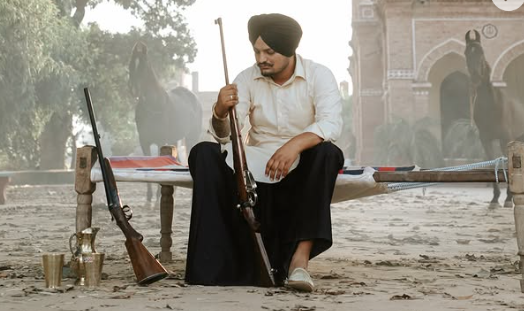
Shubhdeep Singh Sidhu (11 June 1993 – 29 May 2022), professionally known as Sidhu Moose Wala, was an Indian singer and rapper. He mainly worked in Punjabi-language music and films. Moose Wala is considered one of the most influential and successful Punjabi rappers of all time, and many people regard him as one of the greatest Indian musicians of his generation.
In 2020, he was named by The Guardian among 50 up-and-coming artists. He also became the first Punjabi and Indian singer to perform at the Wireless Festival and won four awards at the Brit Asia TV Music Awards.
Sidhu Moose Wala gained mainstream popularity with his song “So High.” In 2018, he released his debut album PBX 1, which reached number 66 on the Billboard Canadian Albums chart. His songs “47” and “Mera Na” also appeared on the UK Singles Chart.
Born in Moosa village in Punjab, he began his career in 2016 as a songwriter for the song “License” by Ninja. In 2017, he started as a lead artist with Gurlez Akhtar in the duet “G Wagon.” After that, he worked with Brown Boyz on multiple tracks. His songs regularly appeared on the UK Asian Music charts, and his track “Bambiha Bole” reached the top five on the Global YouTube music chart.
In 2021, he released his album Moosetape, whose songs charted worldwide, including on the Billboard Global 200, Billboard Global Excl. US, Canadian Hot 100, UK Asian charts, and New Zealand charts. He also holds the record for the most number-one singles on the Billboard India Songs chart. The album became the first Indian album to cross 1 billion streams on Spotify.
In 2021, Sidhu Moose Wala joined the Indian National Congress and contested the 2022 Punjab Legislative Assembly election from Mansa, but he did not win.
On 29 May 2022, he was shot dead by unidentified attackers. A Canada-based gangster, Goldy Brar, associated with the Lawrence Bishnoi gang, claimed responsibility. According to police, the killing was linked to gang rivalry. On 23 June 2022, his first posthumous song “SYL” was released.
Sidhu Moose Wala’s lyrics, which often included themes of gun culture and violence, were frequently controversial in India. He also faced legal issues related to these themes and his lyrics.
Sidhu Moose Wala Early Life
Shubhdeep Singh Sidhu was born in the village of Moosa in the Mansa district of Punjab, India. His father is Balkaur Singh, and his mother is Charan Kaur, and they belong to the Jat Sikh community.
He studied at Guru Nanak Dev Engineering College, Ludhiana, where he completed a degree in electrical engineering in 2016. During his early years, he was influenced by the American rapper Tupac Shakur. He started listening to hip-hop music when he was in the sixth grade and later received music training from Harvinder Bittu in Ludhiana.
He chose the stage name Sidhu Moose Wala, which means “Sidhu from Moosa,” as a tribute to his village.
After completing his studies, he moved to Brampton, Ontario, Canada as an international student. While living there, he studied at Humber College.
Sidhu Moose Wala Career
2017–2018: Rise to Fame
Sidhu Moose Wala released his first song “G Wagon” in 2017 while living in Brampton. Later that year, he achieved major success with “So High,” produced by Byg Byrd, which won him the Best Lyricist award at the 2017 Brit Asia TV Music Awards.
He then joined Brown Boys Records with Sunny Malton and Byg Byrd. In 2018, he started performing live shows in India and Canada. He released songs like “Issa Jatt,” “It’s All About You,” and “Just Listen.”
In May 2018, he released “Tochan,” followed by “Famous,” which entered the UK Asian Top 40 Chart. He was nominated for Best New Age Sensation at the 2018 PTC Punjabi Music Awards for “Issa Jatt.”
In August 2018, he released his first film song “Dollar” for Dakuaan Da Munda. Later that year, he began releasing independent songs, starting with “Warning Shots,” a diss track aimed at Karan Aujla’s song “Lafaafe.”
In October 2018, he released his debut album PBX 1 under T-Series, which appeared on the Billboard Canadian Albums chart and won Best Album at the 2019 Brit Asia TV Music Awards.
2019–2022: Established Singer
In 2019, he released “Legend,” which won Track of the Year at the Brit Asia TV Awards. He also released songs like “Chosen,” “Outlaw,” “East Side Flow,” and “Mafia Style.”
He collaborated with Bohemia on “Same Beef,” which became a massive hit. His song “47” with Mist and Stefflon Don entered the UK Singles Chart.
In 2020, he released “Tibeyan Da Putt,” which topped iTunes charts, and his album Snitches Get Stitches. He also released “Dear Mama” on his mother’s birthday.
His song “Bambiha Bole” with Amrit Maan became extremely popular, reaching top positions on multiple charts and entering the Global YouTube top 5.
In 2021, he released Moosetape, which charted internationally. He also performed at the Wireless Festival in London, becoming the first Indian artist to do so.
In 2022, he released the EP No Name, which performed well globally. Before his death, he released “The Last Ride” and “Levels,” both of which appeared on international charts.
Posthumous Releases
After his death, several songs were released, including “SYL” (2022), “Mera Na” (2023) with Burna Boy, “Chorni” (2023) with Divine, “Watch Out” (2023), “Drippy” (2024), and “410” (2024). These songs charted in countries like Canada, the UK, and New Zealand.
Acting
Sidhu Moose Wala made his acting debut with the Punjabi film Yes I Am Student, produced under his own banner. He also appeared in Teri Meri Jodi. Later, he announced films like Gunah, Moosa Jatt, and Jattan Da Munda Gaun Lagya.
Public Image
Sidhu Moose Wala had a powerful and complex public image, which played a huge role in his success as well as the controversies surrounding him. He was widely seen as a bold, unapologetic artist who spoke his mind through his music without trying to fit into industry expectations.
On one side, he was deeply respected and admired. Fans connected with him because he stayed real—he didn’t pretend to be something he wasn’t. His lyrics often reflected ground reality, personal struggles, identity, and pride in Punjabi culture, which made him stand out from mainstream artists. He represented a raw, authentic voice that many young listeners related to, especially those who felt disconnected from polished, commercial music.
He also played a major role in taking Punjabi music to a global level. His songs charted internationally, and his presence in global festivals helped bring attention to Punjabi hip-hop worldwide. Artists like Raja Kumari, Yo Yo Honey Singh, and Badshah acknowledged his influence and impact on the industry.
However, his image wasn’t only positive—he was also highly controversial. A major reason was his lyrics, which often included themes like gun culture, violence, and power. Critics argued that such content could influence youth in the wrong way or glorify aggression. Because of this, he faced legal issues and public criticism multiple times.
At the same time, his supporters defended him strongly. They believed his music was simply a reflection of reality and part of hip-hop culture, where artists express their environment and experiences without filters. This created a clear divide—some saw him as a voice of truth, while others saw him as promoting negativity.
Even with the controversies, Moose Wala never backed down or changed his style to please critics. This fearless attitude became a defining part of his personality and brand. It made him stand out, but it also kept him constantly in the spotlight for both praise and criticism.
In simple terms, Sidhu Moose Wala’s public image was a mix of authenticity, influence, controversy, and strong individuality. That combination is exactly what made him unforgettable and why his impact on music continues even after his death.
Personal Life
Family
Sidhu Moose Wala was deeply connected to his roots and family. He lived in his native village Moosa in Punjab, even after achieving international fame. Unlike many artists who shift to big cities, he chose to stay grounded in his hometown, which made him even more relatable to his fans. Many of his followers would visit Moosa just to catch a glimpse of him or meet him in person.
He shared a very close bond with his parents, especially his mother Charan Kaur, who has often been seen speaking publicly about him after his death. His father, Balkaur Singh, also played an important role in his life and later became active in seeking justice after his son’s killing.
One of the most emotional aspects of his personal life was his connection with his grandmother. He kept his hair long because of her wish, which also aligns with Sikh traditions where uncut hair (Kesh) holds religious importance. This showed that despite his modern lifestyle and global fame, he remained strongly rooted in his cultural and religious values.
Even after his death in 2022, his family continued to remain in the public eye. On 17 March 2024, his parents had another son through IVF. This moment was widely discussed, as it symbolized hope and continuation of his family legacy after a tragic loss
Feuds
Sidhu Moose Wala was also known for his high-profile rivalries, the most notable being with Karan Aujla. Their feud was not just personal—it became a major talking point in the Punjabi music industry and among fans.
The conflict reportedly started when a video related to Moose Wala’s song, which targeted Aujla, got leaked to Aujla’s management. This led to tensions between both sides, and things quickly escalated. Instead of resolving the issue privately, both artists began responding publicly through their music, social media posts, and live performances.
This back-and-forth gave rise to diss tracks. Aujla released “Lafaafe,” and Moose Wala replied with “Warning Shots.” These songs were not just music—they were direct responses aimed at each other, which made fans even more invested in the rivalry.
Their feud highlighted a larger trend in hip-hop culture, where lyrical battles and rivalries are often used as a way to assert dominance and gain attention. However, in their case, it sometimes went beyond music and created real-world tension.
At times, the rivalry seemed to calm down, and there were moments when both sides appeared to move on. However, it never fully disappeared. After Moose Wala’s death, Karan Aujla paid tribute to him through the song “Maa,” which showed respect despite their past differences.
Overall, these feuds added to Moose Wala’s bold and fearless image but also contributed to controversies around his career.
Legal Issues and Controversies
At the time of his death, Moose Wala was facing legal cases related to promoting gun culture. In 2020, videos of him using firearms went viral, leading to police action under the Arms Act.
He also faced criticism for songs referencing historical and political topics, including Mai Bhago and the Khalistan movement. He later apologized for some controversies and clarified his views in interviews.